
The Three Bowlegs
Welcome back to another exciting collaboration with the Ah-Tah-Thi-Ki Museum! Over the past few months, we have already had two incredible blog collaborations, first, looking at the infamous Zachary Taylor letter and second, talking about Peace Medals. This week, we are once again looking back in history. This week, we are taking a look at three historic figures who all shared something simple: their name. In Seminole history, there have been three influential men who carried the name “Bowlegs.” But who were they? Join us for this deep dive into the three Bowlegses, and their incredibly different, impactful ways of culture keeping that helped drive the Seminoles of Florida forward.
This blog post has been written in collaboration with the Ah-Tah-Thi-Ki Museum’s Research Manager Joseph Gilbert. Keep a lookout in the coming months for more collaborations with the Museum!
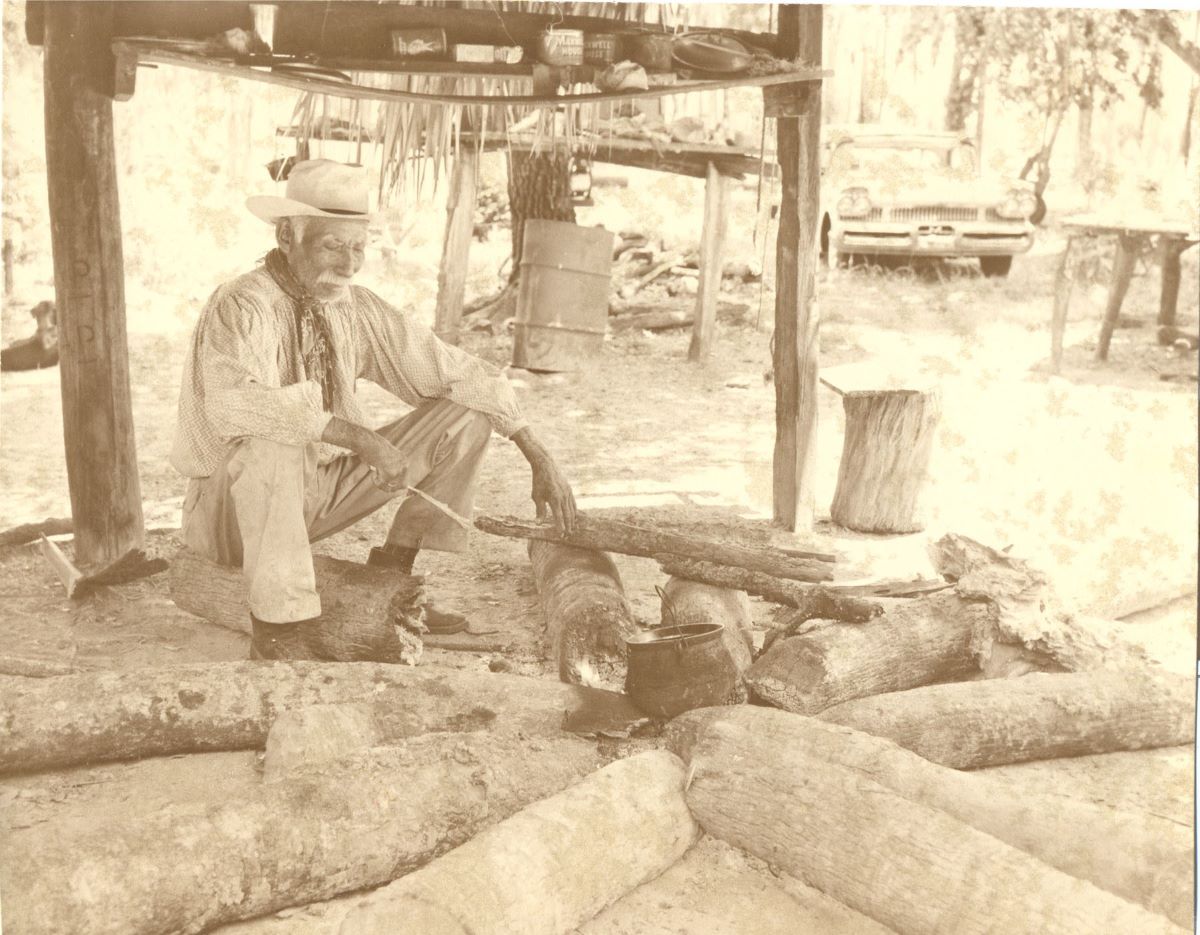
In our featured image, you can see Billy Bowlegs III at his camp in Brighton, circa 1958 (State Archives of Florida).
The Nature of the Seminole Matrilineal Clan System and Names
Before we can get into the three different Bowlegs men, we first have to explain how they were (or weren’t!) related. Seminoles operate within a matrilineal clan system, meaning their clan and family are determined by their mother’s line. When a child is born, they then take their mother’s clan, not their father’s. Additionally, when a man marries, he may live with, but does not join, his wife’s clan. Typically, when writing about this system, European American’s fundamentally did not understand the nature of these Seminole family groups. Thus, the three Bowlegses that we are talking about are family, as they are all Snake clan and would be related in their mother’s line. When you are in the same clan, you are family. Any uncles would be related by clan and might not carry direct ties like we understand them to be. Sometimes, when you research the three Bowlegs men you also come across certain terminology that needed a caveat, like “King” or “Dynasty.” Our typical definition of these words fundamentally misinterprets Seminole and Creek culture and relationships in relation to these men and isn’t exactly appropriate.
Another cultural practice that directly affects the Bowlegses is the fluidity of Seminole naming practices. Seminole people change their name as they get older, experience a major life shift, or gain new positions in the community. Thus, when a European history reports someone’s name as “Micco” or “Tuskanaggee,” they are really calling them by their title. It is also very common to take the name of a respected leader or family member when they have passed. This is considered a respectful practice in Seminole culture much in the same way naming a newborn after someone is considered respectful in Western culture. These non-Western naming practices make the written European American histories slightly confusing, as different reports could all be about the same person, but their names are recorded differently. All of these cultural practices affected the histories of the three Bowlegses and are important to remember when detailing their lives.
Bolek/Bowlegs
The name “Bowlegs” came from a European American mis-recording of the name “Bolek” or “Bolechs.” Of the three Bowlegses, Bolek is the one we know the least about and lived during a time of intense and rapid change for Seminoles. Tensions would erupt into the Seminole war period during his time as leader. The brother of King Payne, Bolek succeeded him as the leader of the Alachua band of Seminoles in 1812. If you recall from a previous blog post, Ahaya (Cowkeeper) built a thriving cattle industry around the Alachua area during the 1700s. He would go on to amass 7,000-10,000 head of cattle and found Cuscowilla (now, Micanopy). Cuscowilla was the largest Seminole village in the mid-1700s, although its time was short lived. Ahaya was succeeded by his nephew King Payne in 1783, who Payne’s Prairie is named for. King Payne was killed during the Patriot War, when Americans attempted to form a rebellion in East Florida with the intention of annexing the area to American control. Bolek was then chosen for leadership after his death. He founded Bowlegs Town (or Old Town) in 1813 after the previous settlements on the Alachua savanna were razed.
Many of Bolek’s interactions with Europeans and Americans were due to the location of his settlement, near the Florida-Georgia border. As the leader of the settlement, the United States would erroneously assume Bolek spoke for all Seminole people. Although he did have numerous interactions with various leaders, there was not one leader for all Seminole people, and Bolek was responsible for his community and settlement. Although initially hesitant to engage, Bolek would eventually fight against Andrew Jackson during his invasion of Spanish Florida in 1817. This resulted in Bowlegs Town being seized, and Seminoles retreating. The U.S. would purchase Florida from Spain in 1819 via the Adams-Onis Treaty, effectively making the invader Andrew Jackson the governor of Florida. Bolek would die shortly after this and was succeeded by Micanopy. Despite there being limited information about Bolek himself, it is clear that he did what he could to protect his people and his settlement. Unfortunately, conditions for the Seminole people would only continue to deteriorate once Florida came under American control.
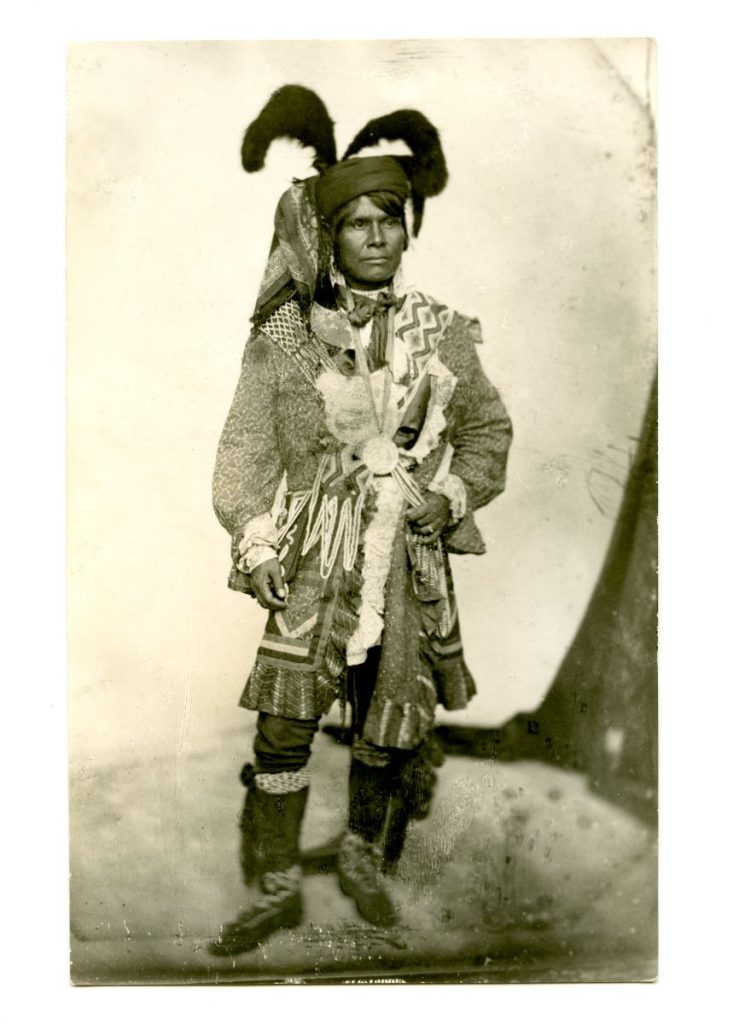
Holata Micco (Billy Bowlegs II) stands in front of a plain background wearing an ornate traditional outfit, including a large plumed turban, a beaded bandolier bag, sashes, a long coat, and boots. (2024.26.15, ATTK Museum)
Holata Micco (Billy Bowlegs II)
Our second Bowlegs, Holata Micco, rose to prominence as a leader towards the end of the Seminole War period, especially prior to and during what historians call the “Third” Seminole War. It is also sometimes known as “Billy Bowlegs War.” As a representative for the Seminole people, he tried to convince the United States to give up their attempts at Seminole removal. His camp was located within the eastern edge of the Big Cypress region of South Florida. Throughout his time as a leader and during the Seminole War period, Holata Micco would play politics and leverage power to protect Seminole interests and resist removal. A few different times, Holata Micco would placate the United States, playing along with their demands before refusing removal, effectively buying Seminoles time to remain in Florida.
By 1855, Florida had already become a state, and several hundred Seminoles still lived in the southernmost reaches of the peninsula. Secretary of War Jefferson Davis moved forward with a plan to undermine the Seminoles while making room for new settlers. That plan involved the sale of Seminole land and a trade embargo. Holata Micco took US surveyors’ presence on Seminole land as evidence of another attempt at Indian removal, so he responded to the threat with force. He would lead the Seminoles’ last major resistance against the United States government. Although the United States could not entirely quash the Seminole guerilla fighters, Bowlegs and his family were captured and forcibly removed in 1858.
You might remember that Billy Bowlegs II (Holata Micco) has been previously discussed on the blog. In our ATTK Museum collaboration about Peace Medals, we shared that Holata Micco appeared in the June 12, 1858 edition of Harper’s Weekly: A Journey of Civilization while on the journey to Indian Territory during removal. The author, who tracked him down in New Orleans, would use lithographs of Bowlegs and his family in the article, including one where he is wearing two peace medals. You also might remember that in that article, which was written predatorily, the author mentioned the settlement that Bowlegs negotiated for himself and his family. Through his repeated actions, it is clear that Holata Micco was trying to buy Seminoles time by playing the United States’ own game of politics, through the war and beyond his removal. He argued for the settlement money as a means for supporting his community beyond removal, even wearing those two peace medals as he was forced to Indian Country to leverage their political capital. Although worn down by war, he would be instrumental in arguing for Seminoles to have their own land and reservation in Oklahoma.
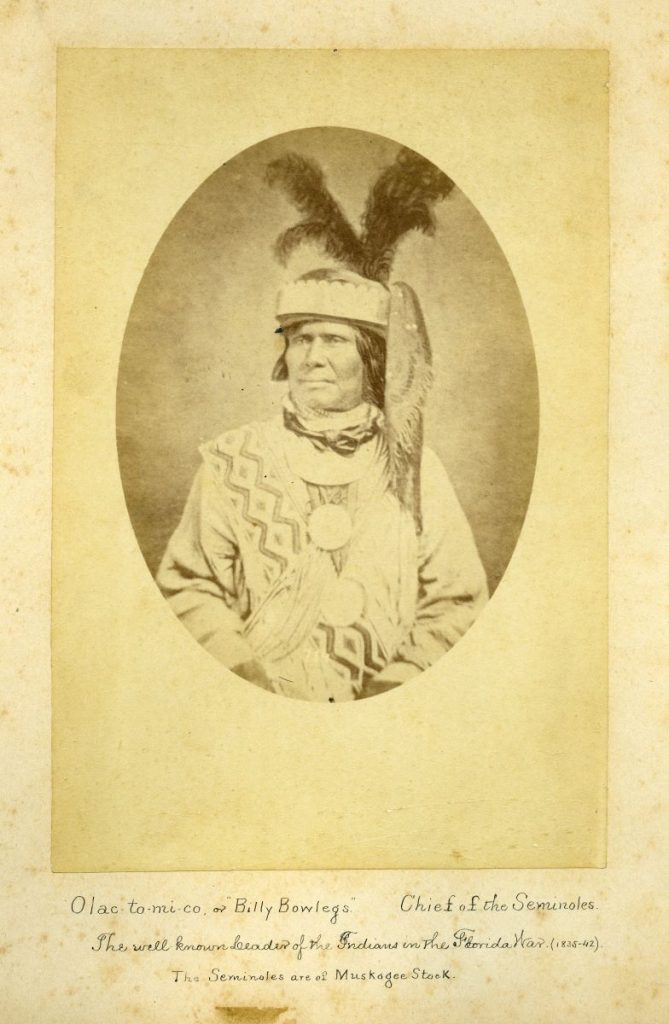
1998.19.1, ATTK Museum
Sonuk Micco
As a small caveat to our journey with the three Bowlegses, there was one other Bowlegs threaded through Seminole history. Sometimes in Seminole culture people will take the names of those who have passed, to honor their life and legacy. Following the death of Holata Micco (Billy Bowlegs II) in 1859, the name Bowlegs would be taken by Sonuk Micco, a captain from the Seminole Nation of Oklahoma in the American Civil War. He would formally enlist in the Union Army as a captain in May 1862, following attacks in Unionist tribes by Confederate Colonel Douglas H. Cooper. Well respected, Sonuk Micco would pass away in 1864 of smallpox, and is buried in Fort Gibson National Cemetery.
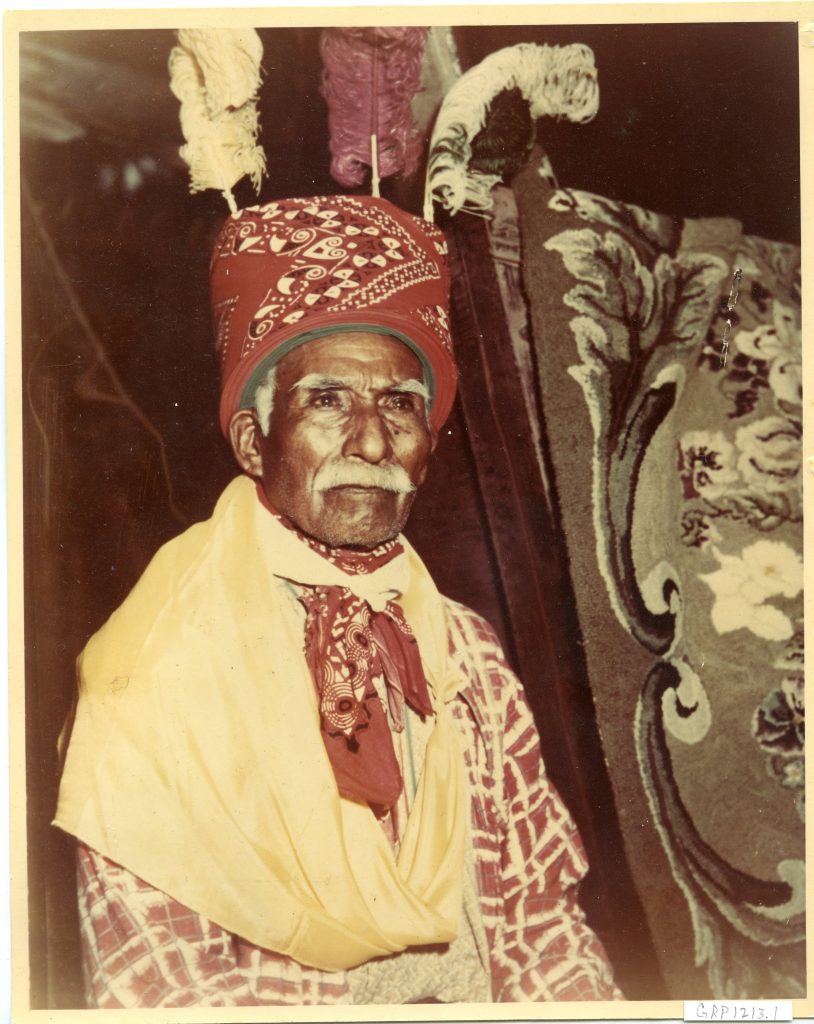
Billy Bowlegs III
Billy Bowlegs III
Billy Bowlegs III is a man who has shown up multiple times on the blog, and even more on our social media. Not only is he a beloved figure in the Brighton community and beyond, but he also was an incredibly open and intelligent ambassador of Seminole culture and traditional ways of life. He was born in 1862 where Lake Istokpoga meets Arbuckle Creek, spending much of his life at Fisheating Creek and around Central Florida until the Brighton reservation was established. Born Billy Fewell, Billy Bowlegs III would choose his name to honor both Bolek and Bowlegs II, taking on the name as Sonuk Micco did. On the Brighton reservation, Bowlegs III was an important community figure who would share traditional cultural stories and skills with Seminole children. Bowlegs III is remembered as an accomplished hunter, guide, storyteller, and historian who helped introduce non-tribal people to the Seminole Tribe and their story in the 20th century.
Following the Seminole War period, Seminoles were rightfully mistrusting of western culture and Americans. In the 20th century, Billy Bowlegs III frequently served as a Seminole liaison to non-natives. He was one of the few who could read and write in English. Bowlegs III traded furs and pelts with buyers, greeted the first train to arrive in Kissimmee, and consulted with academics on Seminole history and culture. Bowlegs III made many non-native friends, including fellow historian Albert Devane, who he referred to as his “blood-brother.” These two men went to Seminole War battlefields together, flew on planes together, and visited each other’s homes. In DeVane’s time, Oral History was a fledgling practice, one both Devane and Bowlegs III were interested in. He would trust his friend with his life story and the Seminole story in several interviews, which now serve as an important cultural resource for the community.
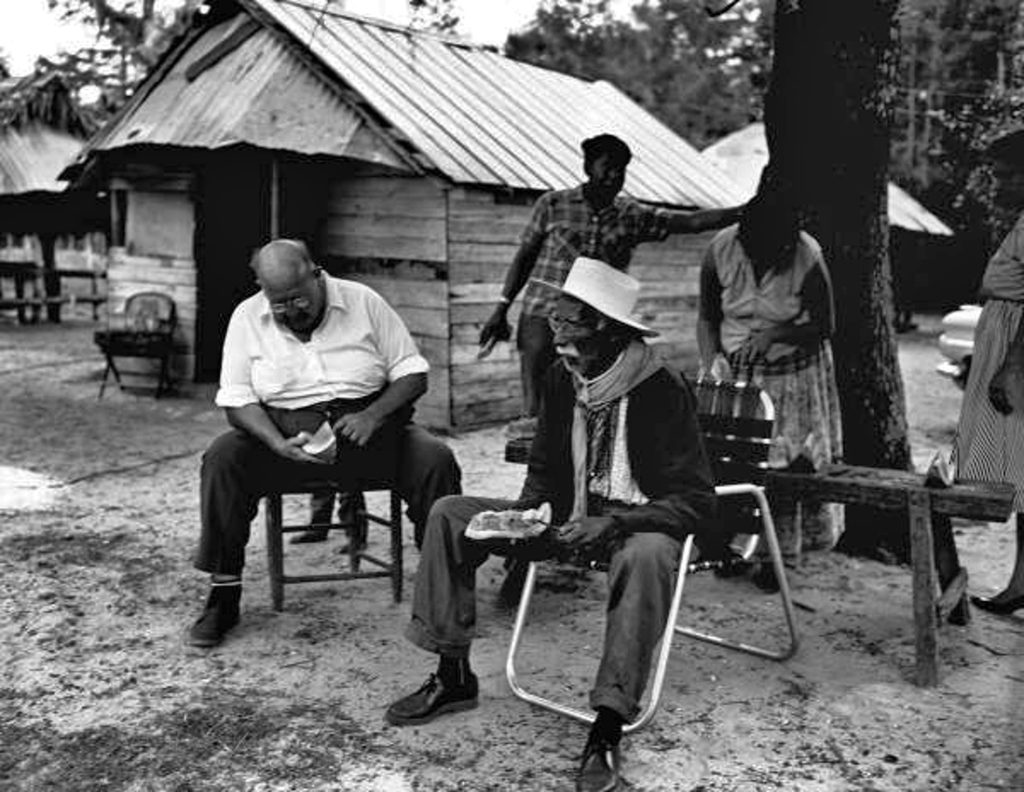
Billy Bowlegs III and Albert Devane eating watermelon, circa 1962. State Archives of Florida.
Bowlegs III was also well known and loved on the festival circuit, often going to places like the Florida Folklife Festival and sharing traditional Seminole practices, dressing in regalia, and storytelling. You can find numerous images of him, via the Florida Memory Project, attending festivals throughout the state of Florida, many from their very beginnings. It is partly because of Billy Bowlegs III, and others like him, that the presence of Seminoles in the minds of Floridians was so culturally strong. Beyond just being an ambassador, he was unflinchingly present and unapologetic about his Seminole identity, despite the unwavering pressure to assimilate. Billy Bowlegs III served as a beacon for maintaining traditional Seminole practices and identity even as they adapted to the United States society. Billy Bowlegs III would pass away in 1965 at the age of 102.
The Differing Legacies of the Bowlegses
While all three Bowlegses had incredibly different impacts on the Seminole story and history, they all deserve their own place and space in our memories. Often, because they share the same name, historians and people unfamiliar with Seminole history and cultural practices mix them up. But, they were three distinct men who had different avenues for culture keeping and pushing the Seminole Tribe forward. For Bolek, it was protecting his community as war loomed on the horizon. For Billy Bowlegs II, it was playing a game of politics to gain time and enough power for his people to escape removal, even if in the end he was not able to stay in Florida himself. For Billy Bowlegs III, his role lay in protecting traditional Seminole culture and ways of life against the incredible pressure to assimilate Western culture, while still adapting to the changing world around him. But all three, spanning over a hundred years of Seminole history, would work to protect the Seminole communities, their way of life, and their homelands of Florida.